
Plant nutrients
Carotenoids: what they are and how to choose
Aug
Last reviewed Next review April 20273 sources
Quick answer
What are the benefits of carotenoids?
Carotenoids are plant pigments such as beta-carotene, alpha-carotene, lycopene and lutein, found in carrots, tomatoes and leafy greens. No health claim for carotenoids themselves is authorised in the UK; a product can only use the vitamin E claim if it adds enough vitamin E. The NHS warns that beta-carotene supplements increase lung cancer risk in people who smoke or have been heavily exposed to asbestos.
Key facts
- Main carotenoids: beta-carotene, alpha-carotene, lycopene, lutein.
- Fat-soluble: absorbed better with some oil or fat.
- No authorised UK health claims for carotenoids.
- Smokers and people heavily exposed to asbestos should avoid beta-carotene supplements (NHS).
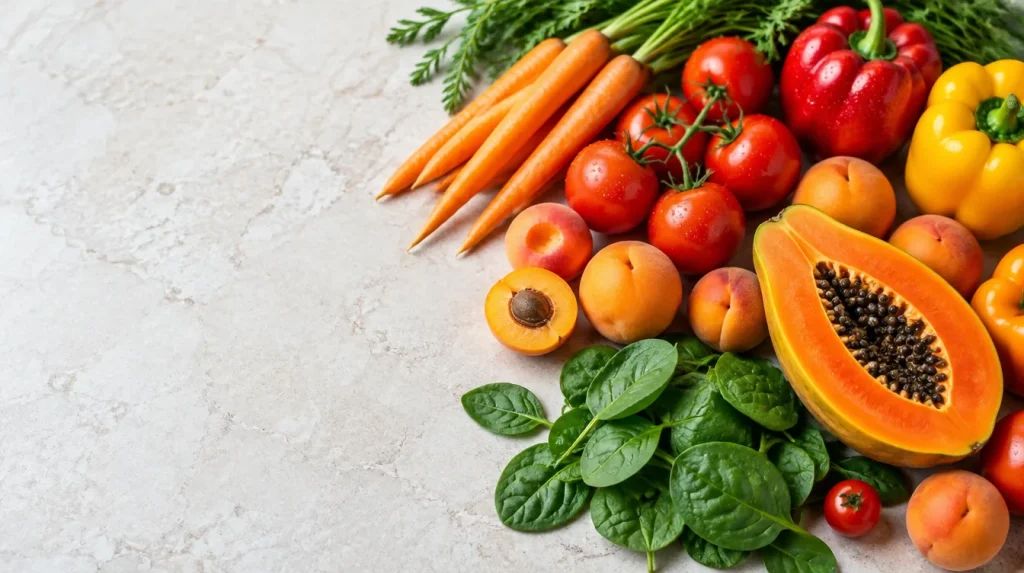
Carotenoids are the pigments that make carrots orange, tomatoes red and spinach deep green — and “eat the rainbow” is genuinely good advice. Carotenoid supplements are often sold with claims that are not authorised. This guide is the honest version: what carotenoids are, the one claim that can actually be made about a product like this and the many that cannot, a safety point that specifically matters if you smoke, and how to choose.
In this guide
What carotenoids are
Carotenoids are a family of plant pigments. The best-known are beta-carotene and alpha-carotene (orange vegetables), lycopene (tomatoes) and lutein (leafy greens and marigold). They are fat-soluble, so the body absorbs them better alongside some oil — which is why a good carotenoid supplement is usually an oil-based capsule rather than a dry tablet. A “complex” or blend aims to give you the mix you would get from eating a range of coloured produce, rather than one isolated pigment.
The honest part: what can and cannot be claimed
Here is the bit most sellers blur. Carotenoids themselves carry no authorised health claims in Great Britain — not beta-carotene, not lycopene, not lutein. So no one is permitted to tell you a carotenoid supplement does anything for your eyes, your skin or your immunity, and you should be sceptical of any product page that does.
Where a carotenoid product can carry a claim, it is usually because of something added to it. If a blend includes vitamin E at a meaningful level, then one authorised claim applies: “vitamin E contributes to the protection of cells from oxidative stress” — an antioxidant role. That claim attaches to the vitamin E, not to the carotenoids, and only when the product provides at least 15% of the vitamin E reference intake per serving. It is worth understanding the distinction so you know exactly what a label is (and is not) entitled to say.
A safety point that matters if you smoke
This one is important and specific. Large trials of high-dose beta-carotene supplements in smokers found an increased risk of lung cancer, not a reduced one. As a result, the firm guidance is that smokers and former smokers, and people exposed to asbestos, should avoid high-dose beta-carotene supplements. Beta-carotene from food is not the concern — this is about concentrated supplement doses. If that is you, this is a category to be cautious with, and a conversation to have with your GP rather than a decision to make from a product page.
Whole-food blend vs a single isolated carotenoid
Two philosophies exist. One isolates a single high-dose carotenoid (e.g. a standalone lutein or lycopene). The other provides a lower-dose blend from real plants — closer to how carotenoids occur in food, where they come as a mixture. Neither can carry a carotenoid health claim, so choose on which approach you prefer and on transparency: a product that lists the actual milligrams of each carotenoid is being straighter with you than one that just says “antioxidant blend”.
What to look for when buying
- The actual carotenoids and amounts, listed in milligrams — not just “carotenoid complex”.
- An oil base, since carotenoids are fat-soluble and absorb better with fat.
- Any added vitamin E or C — these can carry the authorised claim that they contribute to the protection of cells from oxidative stress, where the carotenoids cannot.
- Allergens and suitability. Oil capsules are frequently made with gelatine (so not vegetarian), and plant blends can carry soya — check both.
- Value per day, especially for premium whole-food blends, which sit at the higher end.
Food first
You get carotenoids for free, in variety, from eating colourful vegetables and fruit — carrots, sweet potato, tomatoes, red peppers, spinach and kale. Because they are fat-soluble, a little oil with the meal (a drizzle of olive oil on a salad, say) helps absorption. A supplement is for people who want a consistent measured blend on top of that, not a replacement for the vegetables.
The NeoLife option
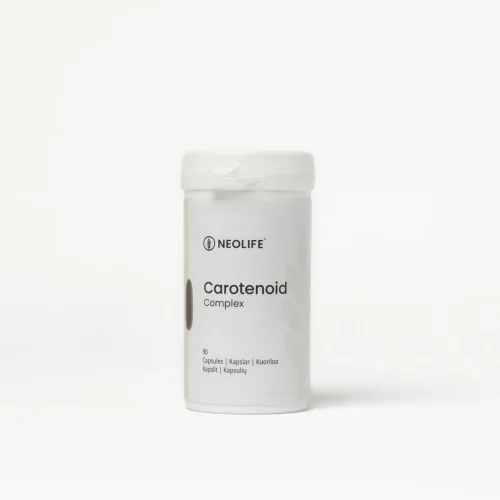
NeoLife Carotenoid Complex is a whole-food, oil-based blend carrying four carotenoids — beta- and alpha-carotene, lycopene and lutein — extracted from five plants (carrot, paprika, tomato, spinach and marigold), with an added fruit blend and vitamin E. At 6 mg vitamin E per capsule (50% NRV) — 150% NRV at three capsules — it meets the threshold for the authorised claim that vitamin E contributes to the protection of cells from oxidative stress; the carotenoids carry no claim, and we do not imply one. It is 90 capsules, one to three a day (from about 75p a day). Two things to note: it contains soy and gelatine, so it is not suitable for vegetarians or anyone avoiding those; and it sits at the premium end at £67.50.
What we do not claim
To be completely clear: carotenoids have no authorised GB health claims, and nothing here should be read as a promise of any health effect. The only authorised claim relevant to this product is the vitamin E oxidative-stress claim above. It is a food supplement, not a medicine, and it is not intended to diagnose, treat, cure or prevent any disease. If you smoke, are a former smoker, are pregnant, or take medication, speak to your GP before taking a carotenoid or beta-carotene supplement.
Products in this guide
Sources
- Vitamins and minerals: others (including beta-carotene, magnesium and zinc) NHS
- Why 5 A Day? NHS
- Great Britain nutrition and health claims (NHC) register Department of Health and Social Care, GOV.UK
Sources checked 16 October 2026. Health claims on this page use only wording authorised in Great Britain. How we write and check our guides.
Genuine NeoLife, delivered in the UK
Free UK delivery on orders over £150. Order online, no membership needed.
More guides
 Plant nutrientsLutein and Zeaxanthin: Food Sources, Supplements and What the Research ShowsLutein and zeaxanthin explained: the best food sources, why no UK health claims are authorised, what the AREDS2 eye research tested, and how to…
 Plant nutrientsPlant Sterols: Side Effects, How Much You Need and Who Should Avoid ThemPlant sterols explained: the authorised UK claims and the 0.8 to 3 g they need, the side effects and label warnings, who should avoid…
 Plant nutrientsGreen tea and herbal tea blends: an honest UK guideAn honest guide to green tea and herbal tea blends: why tea, EGCG, ginseng and rhodiola carry no authorised claims, the green tea safety…
