
Plant nutrients
Lutein and Zeaxanthin: Food Sources, Supplements and What the Research Shows

Oct
Last reviewed Next review April 20275 sources
Quick answer
What are lutein and zeaxanthin, and where do you get them?
Lutein and zeaxanthin are yellow carotenoid pigments that the body cannot make, so they have to come from food: kale, spinach, red peppers, peas, sweetcorn and eggs. They are found in high concentrations in the macula, at the centre of the retina. No health claim for either is authorised in the UK, and the high-dose formula studied for macular degeneration is for people an eye professional has assessed.
Key facts
- The body cannot make them; the average western diet gives no more than 3 mg a day.
- Kale has about 11.4 mg of lutein per 100 g; red pepper 8.5 mg; spinach 7.9 mg.
- No health claims for lutein or zeaxanthin are authorised in Great Britain.
- The AREDS2 formula used 10 mg lutein and 2 mg zeaxanthin, for people with diagnosed AMD.
In this guide
What lutein and zeaxanthin are
Lutein and zeaxanthin belong to the carotenoid family, the same group as beta-carotene and lycopene. The Macular Society explains that they are found in high concentrations in the macula, the small central part of the retina. A third carotenoid, meso-zeaxanthin, is formed in the body from lutein, and together the three are known as the macular pigment.
The human body cannot make lutein or zeaxanthin, so they have to come from what you eat. The Macular Society notes that the average western diet is thought to contain no more than 3 mg of lutein and zeaxanthin a day.
The best food sources
Dark leafy greens lead the list. These figures are from the Macular Society, per 100 g of fresh vegetable:
| Food (fresh) | Lutein per 100 g |
|---|---|
| Kale | 11.4 mg |
| Red pepper | 8.5 mg |
| Spinach | 7.9 mg |
| Lettuce | 4.7 mg |
| Leek | 3.6 mg |
| Broccoli | 3.3 mg |
| Peas | 1.7 mg |
A few practical points from the same source:
- Eggs contain lutein and zeaxanthin, and the fat in the yolk may help the body absorb them.
- Zeaxanthin is also found in orange and yellow foods such as sweetcorn and orange peppers.
- Carotenoids are fat-soluble. Cooking with a little oil may help absorption, and very light cooking may help too, although research is ongoing.
A portion of kale or spinach a few times a week, plus peppers, peas and eggs, does more for your intake than any small amount in a general supplement.
What can and cannot be claimed
There are no authorised health claims for lutein or zeaxanthin in Great Britain. So no seller may tell you that a lutein supplement does anything for your eyes, your eyesight or anything else. If a product page promises sharper vision or protection from screens, that wording is not allowed.
What the AREDS2 research looked at
Most lutein supplements trace back to two large US trials run by the National Eye Institute (NEI): AREDS and AREDS2. They tested whether a specific high-dose combination of nutrients could slow age-related macular degeneration (AMD) in people who already had it.
- The NEI reports that the formulas reduced the risk of intermediate AMD progressing to advanced AMD by about 25%, and that they do not prevent AMD from starting.
- The original AREDS formula contained beta-carotene, which increases lung cancer risk in people who smoke or used to smoke. AREDS2 replaced it with 10 mg of lutein and 2 mg of zeaxanthin, alongside high doses of vitamins C and E, zinc and copper.
- The Macular Society says the studies suggest you may benefit if an eye care professional has found certain signs, such as larger drusen, or wet AMD in one eye. There is no clinical evidence of benefit if you only have early signs, advanced AMD in both eyes or active wet AMD.
This is a medical conversation, not a shopping decision. If you have AMD or are worried about your sight, talk to your optometrist or GP before buying an “eye” supplement. AREDS2-style products contain much higher doses than a general multivitamin, and the NEI notes they can affect how some medicines work.
How to read a lutein supplement label
- Find the lutein figure in milligrams per daily dose, and check whether zeaxanthin is included. AREDS2 used 10 mg of lutein and 2 mg of zeaxanthin.
- Check for beta-carotene if you smoke or used to smoke. The NEI advises current and former smokers to avoid the beta-carotene version.
- Look for the source. Lutein in supplements is usually extracted from marigold flowers.
- Take it with a meal that contains some fat, as carotenoids are fat-soluble.
- Add up what you already take. Multivitamins and “eye” formulas often overlap, especially on zinc and vitamin E.
- Ignore vision promises. No lutein claim is authorised in the UK.
Where NeoLife fits
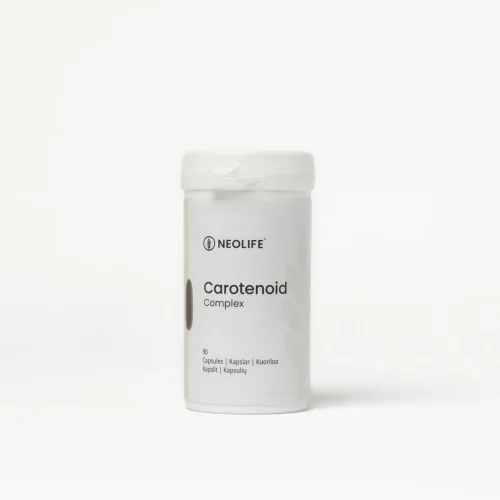
We want to be clear, because the numbers matter here. NeoLife Carotenoid Complex is a broad carotenoid blend, not a lutein supplement. It provides 0.14 mg of lutein per capsule (0.42 mg at three capsules), alongside beta-carotene, alpha-carotene and lycopene, and it does not list zeaxanthin. That is a small fraction of the 10 mg studied in AREDS2, so it is not the product to choose if lutein is what you are after.
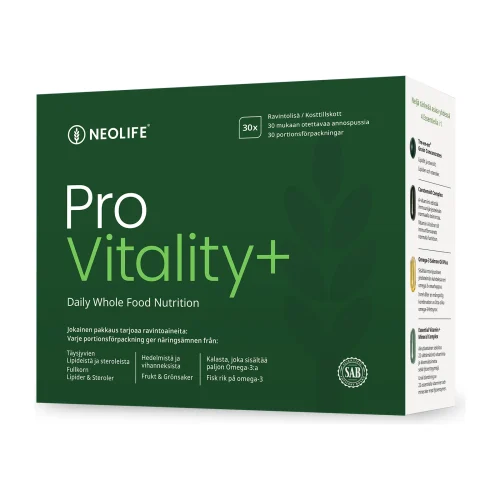
It also contains beta-carotene (1.5 mg per capsule), so smokers and former smokers should speak to their GP first. The same capsule is part of the Pro Vitality+ daily sachet. The only authorised claim for Carotenoid Complex is for its vitamin E: vitamin E contributes to the protection of cells from oxidative stress.
What we do not claim
Lutein and zeaxanthin have no authorised health claims in Great Britain, and nothing on this page is a promise of any effect on your eyes or eyesight. The AREDS2 research is described for information only; it concerns a specific high-dose formula used in people with diagnosed AMD, which we do not sell. Our products are food supplements, not medicines, and are not intended to diagnose, treat, cure or prevent any disease. If you have concerns about your sight, see an optometrist.
Products in this guide
Common questions
What foods are highest in lutein?
Kale is the richest common source, at about 11.4 mg per 100 g fresh, followed by red pepper, spinach, lettuce, leek, broccoli and peas, according to the Macular Society. Eggs also provide lutein and zeaxanthin, and zeaxanthin is found in sweetcorn and orange peppers.
How much lutein is in a normal diet?
The Macular Society says the average western diet is thought to contain no more than 3 mg of lutein and zeaxanthin a day. The body cannot make either, so food is the only natural source.
What is the AREDS2 formula?
It is the combination tested in the US National Eye Institute’s AREDS2 trial for people with age-related macular degeneration: 10 mg lutein, 2 mg zeaxanthin, vitamin C, vitamin E, zinc and copper. It replaced beta-carotene, which increases lung cancer risk in current and former smokers. It is for people an eye professional has assessed, not a general supplement.
Can lutein supplements improve eyesight?
No health claim for lutein or zeaxanthin is authorised in Great Britain, so no seller may say that they improve or protect your eyesight. If you are worried about your vision, see an optometrist.
Is lutein safe for smokers?
Lutein itself is what replaced beta-carotene in the AREDS2 formula, because beta-carotene increases lung cancer risk in current and former smokers. Check any carotenoid or eye supplement for beta-carotene, and if you smoke or used to, speak to your GP before taking one.
Sources
- Nutrition for eye health and macular disease Macular Society
- About AREDS and AREDS2 National Eye Institute (US NIH)
- AREDS 2 supplements for age-related macular degeneration National Eye Institute (US NIH)
- Age-related macular degeneration (AMD) NHS
- Great Britain nutrition and health claims (NHC) register Department of Health and Social Care, GOV.UK
Sources checked 17 October 2026. Health claims on this page use only wording authorised in Great Britain. How we write and check our guides.
Genuine NeoLife, delivered in the UK
Free UK delivery on orders over £150. Order online, no membership needed.
More guides
 Plant nutrientsPlant Sterols: Side Effects, How Much You Need and Who Should Avoid ThemPlant sterols explained: the authorised UK claims and the 0.8 to 3 g they need, the side effects and label warnings, who should avoid…
 Plant nutrientsGreen tea and herbal tea blends: an honest UK guideAn honest guide to green tea and herbal tea blends: why tea, EGCG, ginseng and rhodiola carry no authorised claims, the green tea safety…
 Plant nutrientsFlavonoids: what they are, the green tea caution and how to chooseAn honest guide to flavonoid supplements: what they are, why flavonoids carry no authorised claims, the green tea safety warnings, and how to choose.
