
Plant nutrients
Flavonoids: what they are, the green tea caution and how to choose
Aug
Last reviewed Next review April 20273 sources
Quick answer
Are flavonoid supplements worth taking?
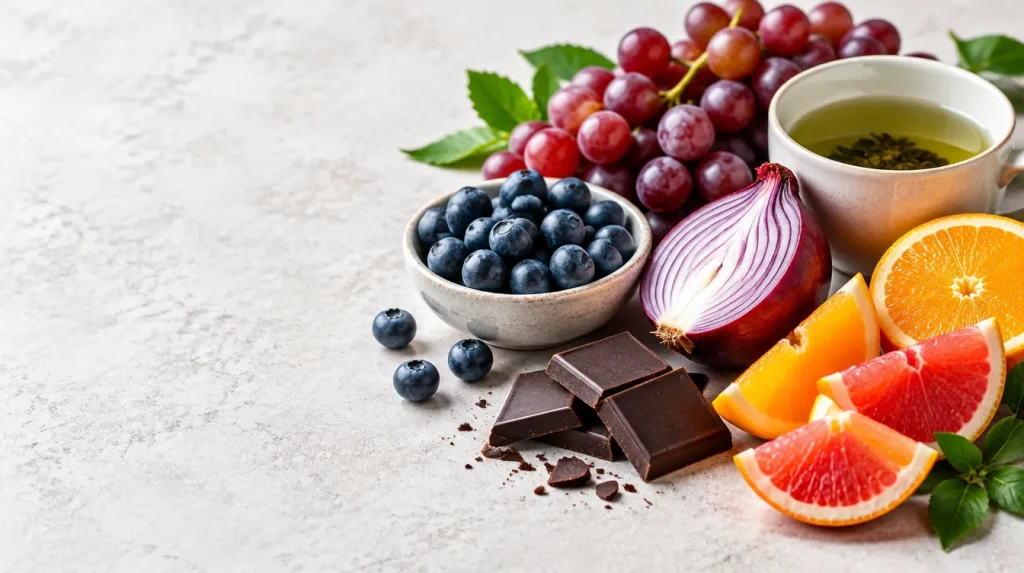
Flavonoids are plant pigments and polyphenols found in berries, tea, cocoa, citrus and colourful vegetables. No health claim for flavonoids is authorised in the UK, so a supplement cannot promise benefits from them; any claim has to come from added vitamins. Food is the better source, and blends that contain green tea carry an 800 mg-a-day EGCG limit.
Key facts
- Main families: catechins (tea), anthocyanins (berries), proanthocyanidins (grape, cranberry) and citrus flavonoids.
- No authorised UK health claims for flavonoids.
- Blends with green tea: no more than 800 mg of EGCG a day from all sources.
- Food first: the NHS 5 A Day advice covers the same foods.
Flavonoids are the natural compounds behind a lot of “antioxidant” and “eat the rainbow” marketing — the pigments and polyphenols in berries, tea, cocoa, citrus and colourful vegetables. Supplements bottle them, often with claims that are not authorised. This guide is the honest version: what flavonoids are, what can and cannot be claimed, a genuinely important safety point when a flavonoid blend contains green tea, and how to choose.
In this guide
What flavonoids are
Flavonoids are a large family of plant polyphenols — including catechins (tea), anthocyanins (berries, red cabbage), proanthocyanidins (grape, cranberry) and citrus flavonoids. They occur across colourful fruit, vegetables, tea and cocoa, and they are what a lot of “antioxidant” talk refers to. A flavonoid supplement concentrates extracts from several such plants into a tablet; a transparent one names the plants and, where relevant, quantifies the active fractions.
The honest part: what can and cannot be claimed
Flavonoids carry no authorised health claims in Great Britain. The proposed claims for polyphenols and flavonoid compounds were, with very narrow exceptions, not authorised — so no one may make a health claim for a flavonoid blend on the strength of its berry or tea content.
Where a flavonoid product can carry claims, it is because of an added vitamin. If the blend includes vitamin C (or vitamin E) at a meaningful level, the authorised claims for that vitamin apply — for vitamin C, for example, contributions to the normal function of the immune system and the reduction of tiredness and fatigue, among others. Those claims attach to the vitamin, not to the flavonoids. It is worth knowing the difference so you can read a label for what it is actually entitled to say. (See our vitamin C guide for the full authorised set.)
Important: the green tea safety point
This matters and is easy to miss. Many flavonoid blends include a green tea extract standardised for catechins, and green tea extract products carry safety warnings on the pack because of their EGCG content. If a flavonoid supplement contains green tea, the label should (and this page does) tell you:
- Not for under-18s, and not for women who are pregnant or breastfeeding.
- Do not take on an empty stomach — take it with a meal.
- Do not take alongside other green tea products on the same day.
- Do not consume 800 mg or more of EGCG (epigallocatechin-3-gallate) per day from all sources.
- It contains caffeine.
If you take prescribed medication or are under medical care, check with your GP or pharmacist before taking any green tea supplement. This is not a benefit list — it is the safety information that comes with the ingredient, and any responsible seller will put it in front of you.
What to look for when buying
- Named plant extracts, not a vague “antioxidant blend”.
- Added vitamin C or E — the part that can carry authorised claims where the flavonoids cannot.
- Green tea warnings if it contains green tea — present, clear, and worth heeding.
- Allergens and suitability. Colourings such as carmine make a product not vegan; check if that matters to you.
- Value per day, not per bottle.
Food first
Flavonoids are abundant and free in a varied diet: berries, apples, citrus, onions, beans, cocoa, and tea. Eating a range of colourful plants gives you a far wider spread of flavonoids than any single supplement, alongside the fibre and other nutrients they travel with. A flavonoid supplement is a concentrated top-up, not a substitute for the plants.
The NeoLife option
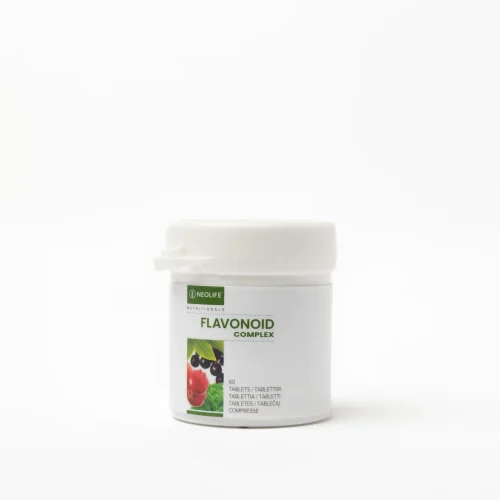
NeoLife Flavonoid Complex is a broad-spectrum blend of flavonoids from cranberry, kale, green tea, beetroot, a mixed-berry blend, grape and citrus, with vitamin C — 60 mg per daily (two-tablet) dose, 75% of the reference intake, which is what allows the authorised vitamin C claims to be used; the flavonoids themselves carry no claim. It is 60 tablets, two a day with a meal, a one-month supply. Because it contains a standardised green tea extract, the green tea safety warnings above apply — it is not for under-18s or pregnant/breastfeeding women, should be taken with food, and should not be combined with other green tea products (a daily dose provides 2.8 mg EGCG and 3.2 mg caffeine). It contains carmine, so it is not vegan. £28.00.
What we do not claim
To be completely clear: flavonoids have no authorised GB health claims, and the claims relevant to this product come from its added vitamin C, not the flavonoids. It is a food supplement, not a medicine, and it is not intended to diagnose, treat, cure or prevent any disease. Observe the green tea restrictions above, and if in doubt, speak to your GP or pharmacist.
Products in this guide
Sources
- Why 5 A Day? NHS
- Great Britain nutrition and health claims (NHC) register Department of Health and Social Care, GOV.UK
- Scientific opinion on the safety of green tea catechins (2018) EFSA Journal
Sources checked 16 October 2026. Health claims on this page use only wording authorised in Great Britain. How we write and check our guides.
Genuine NeoLife, delivered in the UK
Free UK delivery on orders over £150. Order online, no membership needed.
More guides
 Plant nutrientsLutein and Zeaxanthin: Food Sources, Supplements and What the Research ShowsLutein and zeaxanthin explained: the best food sources, why no UK health claims are authorised, what the AREDS2 eye research tested, and how to…
 Plant nutrientsPlant Sterols: Side Effects, How Much You Need and Who Should Avoid ThemPlant sterols explained: the authorised UK claims and the 0.8 to 3 g they need, the side effects and label warnings, who should avoid…
 Plant nutrientsGreen tea and herbal tea blends: an honest UK guideAn honest guide to green tea and herbal tea blends: why tea, EGCG, ginseng and rhodiola carry no authorised claims, the green tea safety…
