
Vitamins & minerals
Do multivitamins actually work? An honest answer from a shop that sells them
Aug
Last reviewed Next review April 20273 sources
Quick answer
Do multivitamins work?
A multivitamin cannot fix a poor diet. The NHS says most people can get the nutrients they need from a varied, balanced diet, and every UK supplement label must say it is not a substitute for one. A multivitamin is a low-dose backstop across many nutrients. If a blood test shows you are low in one, such as iron, B12 or vitamin D, take the specific supplement your GP advises.
Key facts
- Most people can get the nutrients they need from a varied diet (NHS).
- The NHS advises most people in the UK to consider 10 micrograms of vitamin D a day in autumn and winter.
- Check the %NRV column; wildly over 100% on everything is a red flag.
- For a diagnosed deficiency, use the specific supplement your GP suggests.
Here’s the honest answer, from a shop that sells them: a multivitamin cannot fix a poor diet, and anyone who tells you otherwise is selling too hard. The NHS position is that most people can get every nutrient they need by eating a varied and balanced diet — and UK law requires every food supplement label to state that it should not be used as a substitute for a varied diet. So do multivitamins work? For the right person, in the right role — as a backstop, not a substitute — yes, they have a sensible job to do. This guide is about working out whether you’re that person.
In this guide
What a multivitamin actually is
A multivitamin and mineral supplement is a broad, low-dose sweep across many nutrients at once — typically the vitamins A, C, D, E and the B-complex, plus minerals — rather than a large dose of any single one. That design tells you its purpose: it’s built to fill scattered small gaps, not to correct a specific deficiency. If a blood test has shown you’re genuinely low in one nutrient — iron, B12, vitamin D — the right response is the specific supplement your GP suggests at the right dose, not a multivitamin that includes a token amount of it.
Who actually benefits from one?
The realistic case for a multivitamin is not “everyone, always”. It’s people whose eating pattern predictably leaves gaps:
- People who eat a narrow range of foods — through habit, appetite, budget or a restrictive diet
- People in a stretch of life where cooking properly has collapsed — new parents, carers, shift workers, students in exam season
- Older adults whose appetite has shrunk faster than their nutrient needs
- People excluding whole food groups, where several small shortfalls can accumulate quietly
There are also two cases where the NHS goes further than “consider it” and actively recommends specific supplements: vitamin D for most people in the UK to consider during autumn and winter, and folic acid for anyone pregnant or trying to conceive. Those are targeted recommendations, though — not an endorsement of multivitamins in general.
What a multivitamin cannot do
It cannot supply what food provides beyond vitamins and minerals: fibre, protein, the thousands of plant compounds that come with actual vegetables, and the simple satiety of a real meal. It cannot out-supplement a diet of beige food. And more is not better — several vitamins and minerals have upper limits where high intakes cause genuine harm, which is why a sensible multivitamin keeps its doses moderate and why taking two “for good measure” is a bad idea.
How to read a multivitamin label
Three things separate a considered product from a cheap one. First, look at the % NRV column — the Nutrient Reference Value tells you how much of each day’s target the tablet provides; wildly over 100% on everything is a red flag, not a selling point. Second, look at what form the nutrients take — labels that name their sources are being straighter with you than labels that don’t. Third, check the serving honesty: some products advertise a price per pot that turns out to need four tablets a day.
Formula IV: NeoLife’s multivitamin
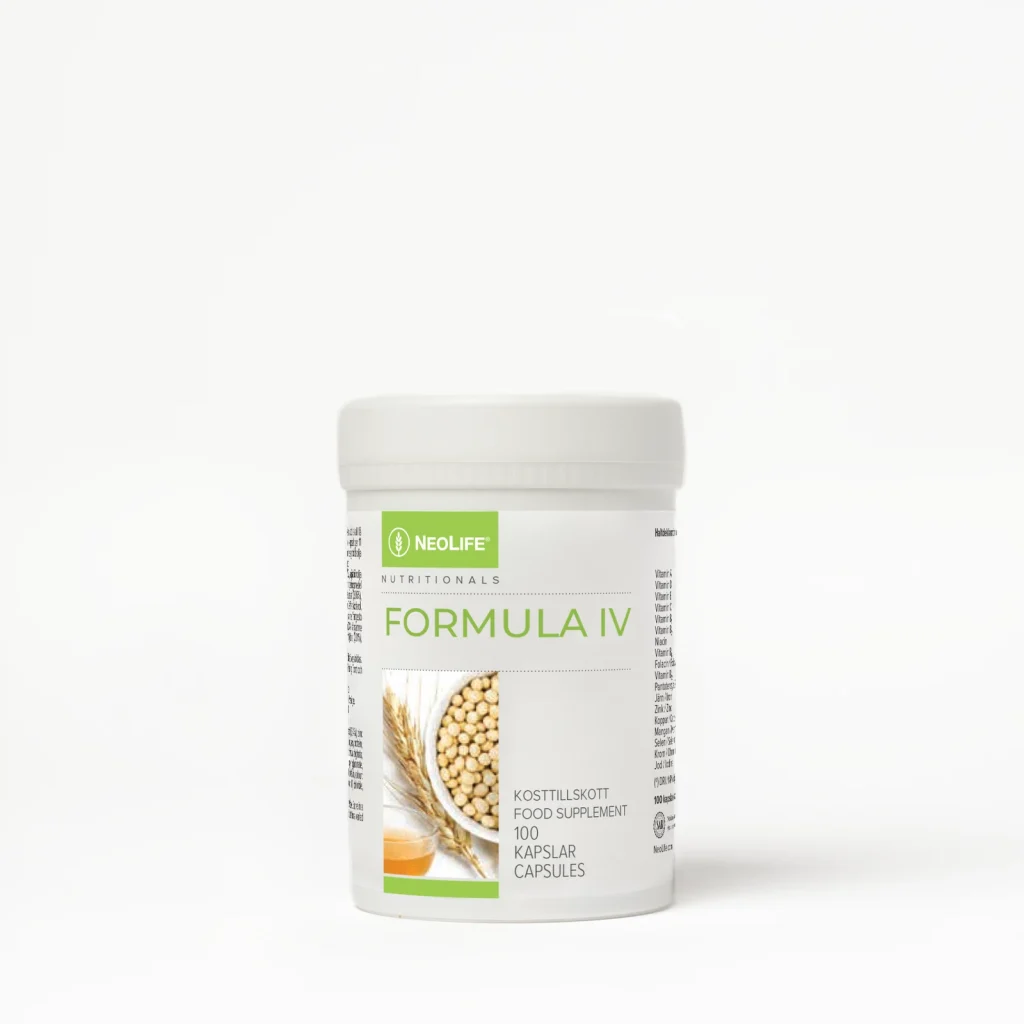
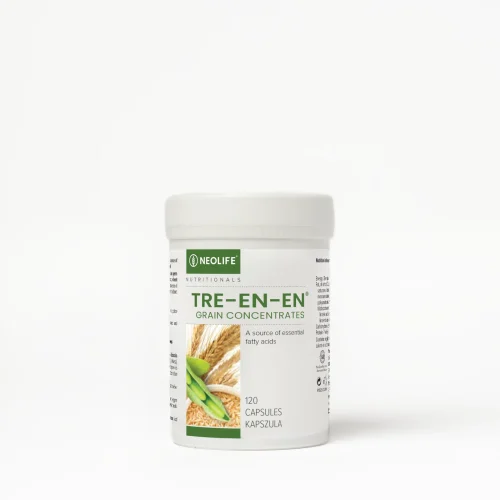
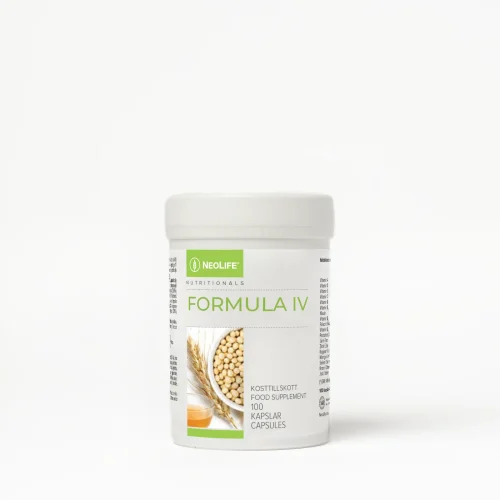
Formula IV has been NeoLife’s flagship multivitamin since the company’s founding era, and its design reflects the whole-food philosophy the brand is built on. Alongside the broad spectrum you’d expect — naturally sourced vitamins A and D, the B-complex, vitamins C and E, plus minerals — it includes Tre-en-en Grain Concentrates: lipids and sterols extracted from whole grains, the parts refining normally strips away. It comes as chlorophyll-coloured soft gelatine capsules, 100 to a pot, at £53 — 53p a day.
See Formula IV’s full details and order it here.
When is the best time to take vitamins?
With a meal, for two reasons. The fat-soluble vitamins — A, D, E and K — are absorbed better alongside some dietary fat, and a capsule on an empty stomach is more likely to cause queasiness. Morning versus evening matters far less than consistency: pick the meal you never skip and anchor the habit there. If you also take individual minerals like iron or zinc, space them out across the day rather than swallowing everything at once — some minerals compete for absorption.
Products in this guide
Common questions
Do multivitamins actually work?
They do the job they are designed for: filling scattered small nutrient gaps in an imperfect diet. They cannot replace a varied and balanced diet, and the NHS says most people can get all the nutrients they need from food alone. The realistic case for one is as a backstop during periods when your eating is narrower than it should be.
Does the NHS recommend taking a multivitamin?
Not in general. The NHS advises that most people don’t need supplements if they eat a varied and balanced diet. Its targeted recommendations are that most people consider vitamin D during autumn and winter, and folic acid for anyone pregnant or trying to conceive.
When is the best time to take a multivitamin?
With a meal. Fat-soluble vitamins (A, D, E and K) absorb better alongside dietary fat, and taking capsules with food reduces queasiness. The specific time of day matters much less than taking it consistently.
Can you take too many vitamins?
Yes. Several vitamins and minerals have upper limits above which high intakes cause genuine harm. Stick to the stated dose on one product rather than stacking multiple products that overlap.
What should I look for on a multivitamin label?
Three things: the % NRV column, which shows how much of each nutrient’s daily reference value a serving provides; whether the label names its nutrient sources; and how many tablets a day the stated price actually requires.
Sources
- Vitamins and minerals NHS
- Vitamin D NHS
- Regulation (EU) No 1169/2011, Annex XIII: reference intakes (NRVs) legislation.gov.uk
Sources checked 16 October 2026. Health claims on this page use only wording authorised in Great Britain. How we write and check our guides.
Genuine NeoLife, delivered in the UK
Free UK delivery on orders over £150. Order online, no membership needed.
Food supplements should not be used as a substitute for a varied and balanced diet and a healthy lifestyle. This article is general information and not medical advice — if you have a health condition or take medication, speak to your GP or pharmacist before starting a new supplement.
Not sure whether a multivitamin or something specific fits your situation? Pick the option that sounds most like you and we’ll point you at something sensible. For the NHS’s targeted recommendations, see our guide to vitamin D — and if you are pregnant or trying to conceive, ask your GP or pharmacist about folic acid. Our zinc guide explains why most people can get enough from food.
More guides
 Vitamins & mineralsWheat germ oil and vitamin E: what they are and how to chooseAn honest guide to wheat germ oil and natural vitamin E: what it gives you, the one authorised claim, natural vs synthetic vitamin E,…
 Vitamins & mineralsVitamin C benefits: what it does, and how to choose a supplementWhat vitamin C actually does — backed by authorised UK health claims — how much you really need, food sources, and how to choose…
 Vitamins & mineralsTypes of magnesium: which is best, and when to take itGlycinate, citrate, oxide — what the types of magnesium actually mean, which is best for what, and the NHS daily figures in plain English.
