
Vitamins & minerals
Zinc deficiency: what to know, and what zinc actually does
Aug
Last reviewed Next review April 20273 sources
Quick answer
What are the signs of low zinc, and how much do you need?
Signs of low zinc intake are non-specific and have many other possible causes, so if you are concerned, ask your GP to test rather than taking a large dose. The body cannot store zinc and needs a steady supply: the NHS says about 9.5 mg a day for men and 7 mg for women. Taking 25 mg or less a day from supplements is unlikely to cause harm.
Key facts
- NHS: about 9.5 mg a day for men, 7 mg for women.
- High doses reduce how much copper the body absorbs (NHS).
- Good food sources: meat, shellfish, cheese, bread and wheatgerm.
- Zinc contributes to the normal function of the immune system (authorised claim).
Your body has no way to store zinc, so it depends on a steady supply from food — and according to the NHS, men need about 9.5mg a day and women about 7mg. This guide covers what zinc actually does, when low intake is worth raising with your GP, the foods that supply it, and what “chelated” means when you see it on a supplement label.
In this guide
What does zinc do?
Zinc is involved in around 300 of the body’s enzymes, which is why its reach is so broad. Its authorised claims include: zinc contributes to the normal function of the immune system, to normal macronutrient metabolism, to normal protein synthesis and to the maintenance of normal skin. It’s a working mineral rather than a stored one — there’s no zinc reserve to draw down, so intake matters day after day rather than on average.
Signs of low zinc
Signs of low intake are non-specific, and each has many other possible causes. If you are concerned, speak to your GP, who can test for it — rather than taking a large dose of zinc on a hunch. That matters because zinc is one of the minerals where more is genuinely not better: the NHS notes that high doses reduce the amount of copper the body can absorb, which over time can lead to anaemia and weakening of the bones. Taking 25mg or less a day is unlikely to cause harm; megadosing is a bad idea.
Which foods contain zinc?
The NHS lists the good sources as meat, shellfish, dairy foods such as cheese, bread, and cereal products such as wheatgerm. Two things follow from that list. First, most people eating a varied diet can get what they need from food — the NHS says so directly. Second, the list is heavy on animal foods, which is why vegans, and anyone who eats little meat, shellfish or dairy, are the groups most likely to run short. Plant sources exist — wholegrains, beans, nuts, seeds — but the zinc in them is generally less well absorbed.
What is chelated zinc?
“Chelated” means the zinc has been bound to another molecule — usually an amino acid. Chelated forms are often described as easier for the body to absorb than simple mineral salts, though how much difference that makes in practice is debated.
On a label, chelated zinc might appear as zinc glycinate, zinc bisglycinate, or zinc bound to methionine. It’s typically a little more expensive than the plainest forms (zinc oxide, zinc sulphate), .
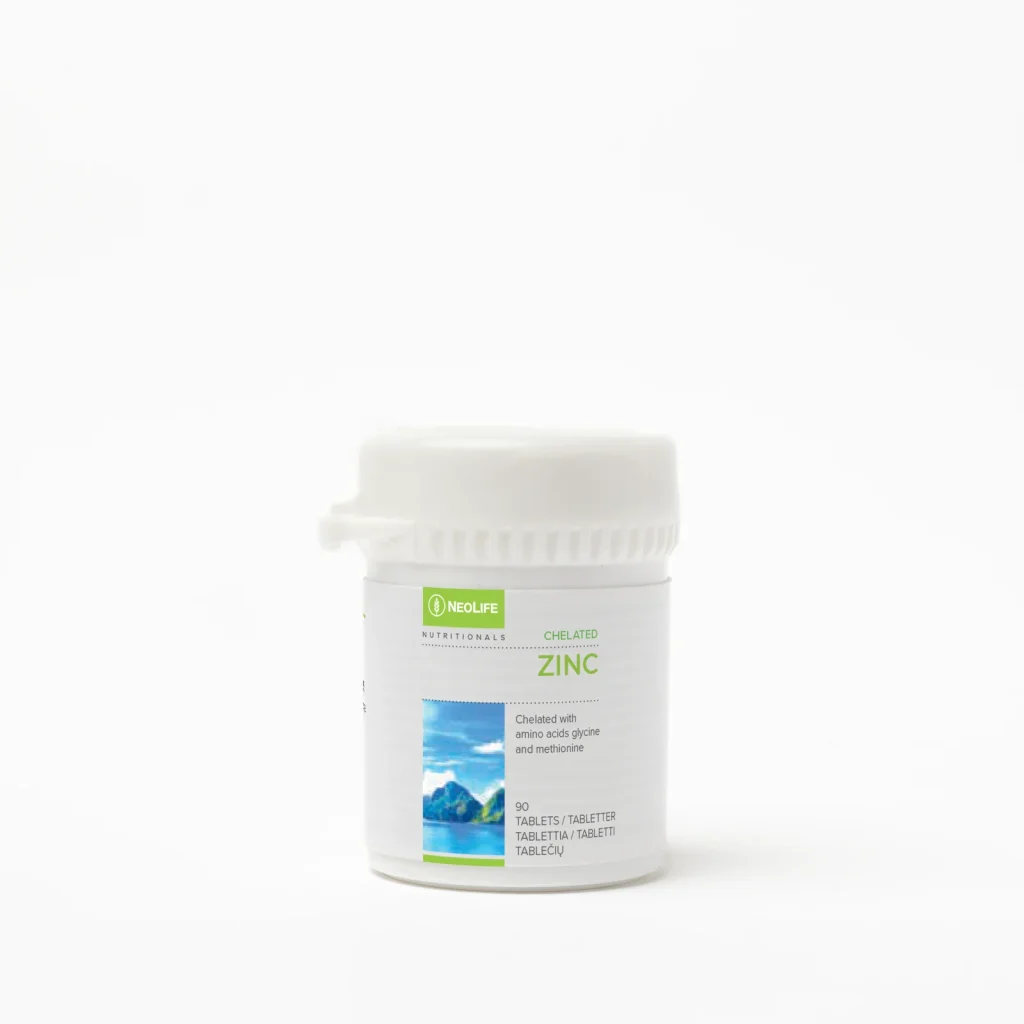
Chelated Zinc: NeoLife’s zinc supplement
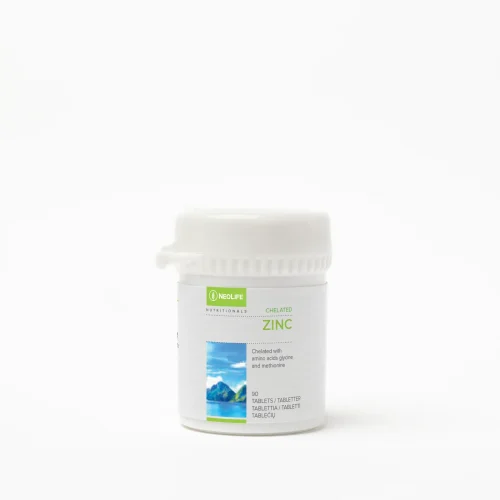
NeoLife Chelated Zinc is exactly what the name says: zinc in chelated form, bound to two amino acids — glycine and methionine. A pot holds 90 tablets for £21.00, which works out at 23p a tablet — three months of daily use from one pot.
We also sell zinc together with vitamin D, which the NHS advises most people in the UK to consider from October to March, as the Vitamin D and Zinc Duo at £41.50, which is £4.50 less than buying them separately.
See Chelated Zinc’s full details and order it here.
When to take zinc
Zinc is best taken with a meal — on an empty stomach it can cause nausea in some people. If you also take an iron supplement, take them at different times of day: iron and zinc compete for absorption, and swallowing them together shortchanges both. Beyond that, the time of day doesn’t much matter; consistency does, since your body doesn’t store it.
If you take prescribed medication — particularly some antibiotics, which zinc can interfere with — check with your GP or pharmacist before starting a zinc supplement. This article is general information, not medical advice.
Products in this guide
Common questions
How much zinc do I need per day?
The NHS says about 9.5mg a day for men aged 19 to 64, and about 7mg a day for women. Most people eating a varied diet including meat, shellfish, dairy or wholegrains can reach this from food alone.
Can you take too much zinc?
Yes. The NHS warns that high doses of zinc reduce how much copper the body can absorb, which can lead to anaemia and weakening of the bones over time. Taking 25mg or less a day is unlikely to cause harm.
What is chelated zinc?
Chelated zinc is zinc that has been bound to another molecule, usually an amino acid such as glycine or methionine, so the digestive system handles it more like food. Chelated forms are often described as easier to absorb, though how much difference that makes in practice is debated.
What are the signs of low zinc?
Signs of low intake are non-specific and all have other possible causes, so if you are concerned, speak to your GP, who can test for it.
Should zinc be taken with food?
Yes, ideally. Zinc taken on an empty stomach can cause nausea in some people. If you also take iron, take the two at different times of day, as they compete for absorption.
Sources
- Vitamins and minerals: others (including beta-carotene, magnesium and zinc) NHS
- Great Britain nutrition and health claims (NHC) register Department of Health and Social Care, GOV.UK
- Regulation (EU) No 432/2012 on permitted health claims, as it applies in Great Britain legislation.gov.uk
Sources checked 16 October 2026. Health claims on this page use only wording authorised in Great Britain. How we write and check our guides.
Genuine NeoLife, delivered in the UK
Free UK delivery on orders over £150. Order online, no membership needed.
Food supplements should not be used as a substitute for a varied and balanced diet and a healthy lifestyle. This article is general information and not medical advice — if you have a health condition or take medication, speak to your GP or pharmacist before starting a new supplement.
Not sure zinc is what you’re actually short of? Pick the option that sounds most like you and we’ll point you at something sensible. And if you’re also looking at vitamin D, our guide to whether vitamin D3 is vegan covers that side of the pairing.
More guides
 Vitamins & mineralsWheat germ oil and vitamin E: what they are and how to chooseAn honest guide to wheat germ oil and natural vitamin E: what it gives you, the one authorised claim, natural vs synthetic vitamin E,…
 Vitamins & mineralsVitamin C benefits: what it does, and how to choose a supplementWhat vitamin C actually does — backed by authorised UK health claims — how much you really need, food sources, and how to choose…
 Vitamins & mineralsDo multivitamins actually work? An honest answer from a shop that sells themA multivitamin can't fix a poor diet — and we sell them. Who genuinely benefits, what the NHS says, and how to read a…
