
Plant nutrients
Cruciferous supplements: what they are and how to choose
Aug
Last reviewed Next review April 20273 sources
Quick answer
What is a cruciferous supplement, and does it work?
A cruciferous supplement concentrates extracts of cabbage-family vegetables such as broccoli, kale, cabbage and watercress into a tablet. Their compounds, including glucosinolates and sulforaphane, carry no authorised UK health claims; only added vitamin E can carry a claim, when a serving gives at least 15% of the reference intake. Eating the vegetables themselves gives you more, including fibre.
Key facts
- Cruciferous (brassica) vegetables: broccoli, cabbage, kale, radish, watercress, mustard.
- No authorised UK claims for glucosinolates or sulforaphane.
- Vitamin E claim applies from 15% of the 12 mg reference intake (1.8 mg) per serving.
- "Equivalent to a serving of vegetables" describes raw material, not what the tablet replaces.
Cruciferous vegetables — broccoli, kale, cabbage, watercress — are nutrition darlings, and supplements built from them ride that reputation. This guide is the honest version: what a cruciferous supplement actually is, what can and cannot be claimed for it, and how to choose.
In this guide
What a cruciferous supplement is
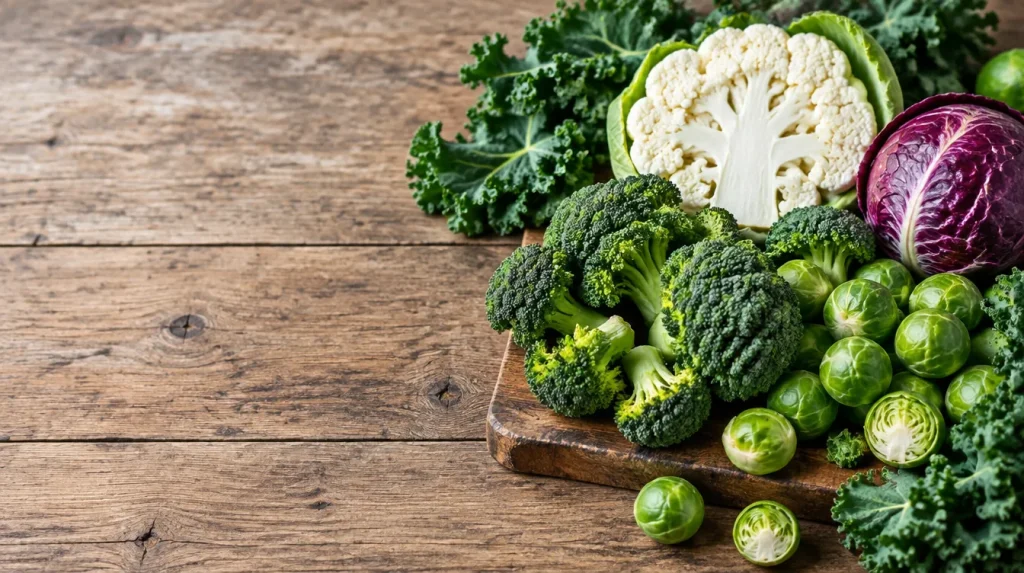
Cruciferous (or brassica) vegetables are the cabbage family — broccoli, cabbage, kale, radish, watercress, mustard and more. A cruciferous supplement concentrates extracts of several of these into a tablet. The compounds people talk about are glucosinolates and their breakdown products such as sulforaphane. A good product lists exactly which plants it uses; a whole-food-derived blend gives you a spread of the plant material rather than one isolated compound.
The honest part: what can and cannot be claimed
This is where cruciferous marketing gets ahead of the law. Cruciferous vegetables and their compounds — including sulforaphane and glucosinolates — carry no authorised health claims in Great Britain. So no one may make a health claim for a cruciferous supplement on the strength of its broccoli or cabbage content. Be wary of any seller who implies one.
Where these products can carry a claim, it is usually because of an added nutrient. If a cruciferous blend includes vitamin E at a meaningful level, one authorised claim applies — “vitamin E contributes to the protection of cells from oxidative stress” — provided the product supplies at least 15% of the reference intake per serving. That claim attaches to the vitamin E, not to the cruciferous extract, and it is worth knowing the difference so you can read a label accurately.
“Equivalent to a serving of vegetables” — read it carefully
A supplement is not a serving of vegetables. A real serving of broccoli brings fibre, water, volume and fullness, and it displaces less healthy foods on the plate — none of which a small tablet replicates. A supplement can add some concentrated plant material to the diet; it is not a substitute for eating the vegetables.
Food first — and here it wins easily
Of all the categories, cruciferous is one where food genuinely beats a supplement. Broccoli, cabbage, cauliflower, kale, Brussels sprouts, rocket and watercress are cheap, widely available, and bring far more than any capsule — and lightly cooking or eating some raw preserves more of the delicate compounds. A cruciferous supplement earns its place only as a top-up for people who eat very few of these vegetables and want some of the plant material in a tablet.
What to look for when buying
- Which plants, named on the label — a transparent blend beats a vague “cruciferous complex”.
- Any added vitamin E or C — these can carry the authorised claim that they contribute to the protection of cells from oxidative stress, where the cruciferous extract cannot.
- Whole-food-derived vs isolated, depending on whether you want a spread of plant material or a standardised single compound.
- Allergens. Cruciferous blends commonly include mustard and often soya — both are declarable allergens, so check.
- Value per day, not per bottle.
The NeoLife option
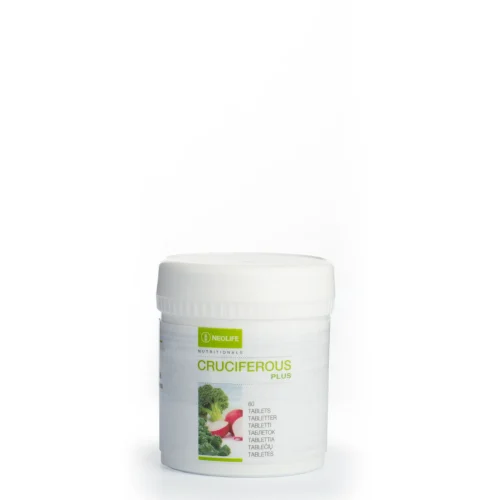
NeoLife Cruciferous Plus is a whole-food-derived blend of five cruciferous plants — broccoli, savoy cabbage, radish, watercress and mustard — with vitamin E. At 3 mg vitamin E (25% of the reference intake) per tablet it meets the threshold for the authorised claim that vitamin E contributes to the protection of cells from oxidative stress; the cruciferous extract itself carries no claim, and we do not imply one. It is 60 tablets, one a day (a two-month supply, about 47p a day). It contains soy and mustard, so check the label if you are allergic to either. £28.00.
What we do not claim
To be completely clear: cruciferous vegetables and their compounds have no authorised GB health claims, and the only authorised claim relevant to this product is the vitamin E oxidative-stress claim above. It is a food supplement, not a medicine, and it is not intended to diagnose, treat, cure or prevent any disease. It does not replace eating vegetables. If you take medication (cruciferous vegetables can interact with some, such as warfarin, via vitamin K) or are pregnant, speak to your GP before taking a concentrated cruciferous supplement.
Products in this guide
Sources
- Why 5 A Day? NHS
- Great Britain nutrition and health claims (NHC) register Department of Health and Social Care, GOV.UK
- Regulation (EU) No 432/2012 on permitted health claims, as it applies in Great Britain legislation.gov.uk
Sources checked 16 October 2026. Health claims on this page use only wording authorised in Great Britain. How we write and check our guides.
Genuine NeoLife, delivered in the UK
Free UK delivery on orders over £150. Order online, no membership needed.
More guides
 Plant nutrientsLutein and Zeaxanthin: Food Sources, Supplements and What the Research ShowsLutein and zeaxanthin explained: the best food sources, why no UK health claims are authorised, what the AREDS2 eye research tested, and how to…
 Plant nutrientsPlant Sterols: Side Effects, How Much You Need and Who Should Avoid ThemPlant sterols explained: the authorised UK claims and the 0.8 to 3 g they need, the side effects and label warnings, who should avoid…
 Plant nutrientsGreen tea and herbal tea blends: an honest UK guideAn honest guide to green tea and herbal tea blends: why tea, EGCG, ginseng and rhodiola carry no authorised claims, the green tea safety…
