
Omega-3 & CoQ10
What is CoQ10? An honest UK guide to coenzyme Q10
Aug
Last reviewed Next review April 20272 sources
Quick answer
What are the benefits of CoQ10?
Coenzyme Q10 is a fat-soluble compound found in almost every cell. Your body makes its own, and small amounts come from oily fish, organ meats and some nuts and oils. There are no authorised UK health claims for CoQ10, so no seller may say it raises energy, helps the heart or slows ageing. If you take it, compare the dose per capsule and the form: ubiquinone or ubiquinol.
Key facts
- Also called ubiquinone; ubiquinol is its reduced form.
- The body makes CoQ10; production tends to fall with age.
- No authorised UK health claims for CoQ10.
- Fat-soluble: take it with a meal that contains some fat.
Coenzyme Q10 is one of the most heavily marketed supplements on the shelf, and one of the most over-claimed. This guide takes the honest route: what CoQ10 actually is, what the law will and will not let anyone tell you about it, and — if you have decided to try it — how to read a label and choose sensibly.
In this guide
- What coenzyme Q10 is
- The honest part: what can and cannot be claimed
- Why people still look into it
- Which foods contain CoQ10?
- Ubiquinone or ubiquinol?
- Why the format matters more than the marketing
- The NeoLife option
- How to choose a CoQ10 supplement
- When to take CoQ10
- What we do not claim
- Related reading
- Common questions
What coenzyme Q10 is
Coenzyme Q10 (also written CoQ10, or by its chemical name ubiquinone) is a fat-soluble compound found in almost every cell in the body. Your body makes its own, and it is also present in small amounts in foods such as oily fish, organ meats and some nuts and oils. There are no authorised health claims for CoQ10 in Great Britain.
It is not a vitamin. Vitamins are, by definition, substances your body cannot make and must get from food; a healthy body makes its own CoQ10, so it is sometimes called a “vitamin-like substance” instead. The name ubiquinone comes from “ubiquitous”, because it is found throughout the body.
That is a description of the molecule’s role in normal biochemistry. It is not a claim that taking a CoQ10 supplement will raise your energy, help your heart, slow ageing or do anything else — and that distinction matters, which is the next section.
The honest part: what can and cannot be claimed
There are currently no health claims authorised for coenzyme Q10 under GB law. When the evidence was assessed for the European register that GB retained, the proposed claims were not accepted, because the evidence did not meet the required standard. So no shop, including this one, is permitted to tell you that a CoQ10 supplement will do a specific thing for your health, and we do not.
We think that is worth saying plainly rather than dressing the product up. CoQ10 is a legitimate, well-characterised nutrient that a lot of people choose to take; it simply does not carry authorised claims, and honesty about that is more useful to you than marketing.
Why people still look into it
Two points come up again and again, and it is fair to explain them without overstating them:
- Age. The amount of CoQ10 the body makes tends to decline as people get older: the efficiency of the body’s own production falls, and demand for it can rise. Levels also vary a lot from person to person. This is why interest in CoQ10 often starts in midlife.
- Medication. If you take any prescribed medication, the right step is a conversation with your GP or pharmacist before trying CoQ10 — not a supplement label.
These explain why people ask about CoQ10. They are not benefits we are claiming for the supplement.
Which foods contain CoQ10?
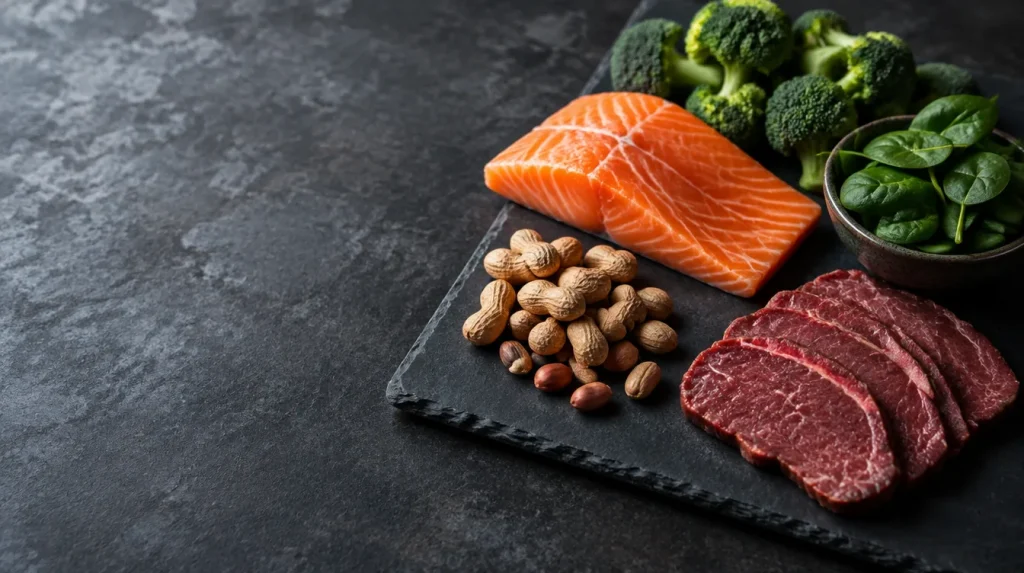
CoQ10 occurs naturally in food, concentrated in the same places it concentrates in the body:
- Organ meats such as heart, liver and kidney are the richest sources
- Muscle meats such as beef and pork
- Oily fish such as sardines, mackerel and trout
- Wholegrains, and smaller amounts in nuts, seeds and some vegetables
The amounts in a normal diet are modest, typically a few milligrams a day, and cooking reduces them further. That gap between dietary amounts and the doses sold in supplements (often 100 mg or more) is worth knowing when you compare labels.
Ubiquinone or ubiquinol?
You will see CoQ10 sold in two forms. Ubiquinone is the conventional, oxidised form and the one most of the research has used; it is stable and well established. Ubiquinol is the reduced form, marketed as better absorbed — though the body readily converts between the two, and ubiquinol is less stable and usually more expensive. Neither form carries an authorised health claim. NeoLife’s product uses the ubiquinone form.
Why the format matters more than the marketing
CoQ10 is fat-soluble and not very well absorbed on its own, so the practical things to look at are the delivery form and whether you take it with food:
- An oil base beats a dry tablet. A softgel that suspends CoQ10 in oil is generally a more sensible format than a dry, pressed tablet, because the compound needs fat to be absorbed.
- Take it with a meal that contains some fat, for the same reason.
- Check the actual dose and whether it is stated per capsule or per serving — they are often different.
The NeoLife option
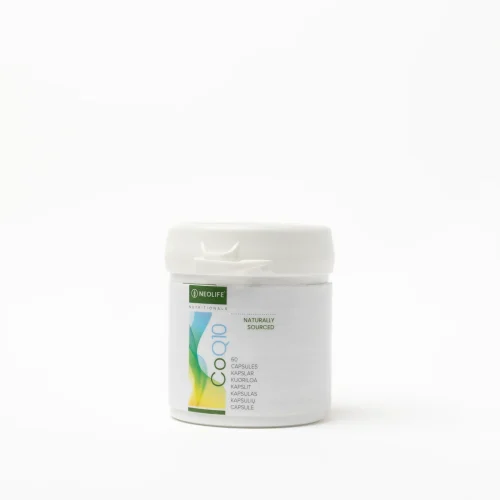
NeoLife CoQ10 provides 100 mg of coenzyme Q10 (ubiquinone) per two-capsule serving, carried in rice bran oil rather than pressed into a dry tablet, alongside plant sterols, grape-skin polyphenols and L-cysteine. It is 60 softgel capsules — 30 servings, so one bottle is a month at the recommended intake, around £1.98 a day. Two things worth knowing before you buy: the 100 mg figure is per two capsules, not per capsule, and the softgel contains gelatine, so it is not suitable for vegetarians or vegans.
How to choose a CoQ10 supplement
- Dose, stated honestly. Supplements typically provide anywhere from 30 mg to 200 mg or more per serving; check whether the headline number is per capsule or per serving.
- An oil-based softgel over a dry tablet, for absorption.
- Form: ubiquinone is the well-established, better-value choice; ubiquinol is not proven to be worth the premium.
- Suitability: most CoQ10 softgels use gelatine — check if that matters to you.
- Value per day, not per bottle.
When to take CoQ10
With a meal that contains some fat. That is the single most useful timing rule, and it follows directly from CoQ10 being fat-soluble. Many people take it with breakfast or dinner; taking it consistently matters more than the time on the clock.
One group should talk to a professional first: anyone on prescribed medication for their heart, blood pressure or blood clotting, because CoQ10 can interact with some of these medicines. If that is you, ask your GP or pharmacist before starting. This guide is general information, not medical advice.
What we do not claim
To be completely clear: there are no authorised GB health claims for coenzyme Q10, and nothing on this page should be read as a promise of any health effect. CoQ10 is a food supplement, not a medicine, and it is not intended to diagnose, treat, cure or prevent any disease. If you are considering it because of a medication you take or a health concern you have, speak to your GP or pharmacist first.
Products in this guide
Common questions
What is CoQ10 in simple terms?
CoQ10 (coenzyme Q10) is a fat-soluble substance your body makes itself, found in nearly every cell. There are no authorised health claims for it in Great Britain.
Is CoQ10 a vitamin?
No. Vitamins are, by definition, substances your body cannot make and must get from food. A healthy body makes its own CoQ10, so it is called a vitamin-like substance instead.
Why does CoQ10 decline with age?
The body’s efficiency at producing CoQ10 tends to fall over time, and demand for it can rise. Individual levels vary considerably from person to person.
What foods are high in CoQ10?
Organ meats such as heart and liver are the richest sources, followed by muscle meats, oily fish like sardines and mackerel, and wholegrains. Normal diets supply only a few milligrams a day, and cooking reduces the amounts further.
When should I take CoQ10?
With a meal containing some fat, because CoQ10 is fat-soluble. If you take heart, blood pressure or blood-clotting medication, speak to your GP or pharmacist before starting it.
Ubiquinone or ubiquinol: which is better?
Ubiquinone is the conventional, stable form used in most research; ubiquinol is the reduced form, usually more expensive. The body converts between the two, and neither carries an authorised health claim. NeoLife CoQ10 uses ubiquinone.
Sources
- Great Britain nutrition and health claims (NHC) register Department of Health and Social Care, GOV.UK
- Coenzyme Q10 National Center for Complementary and Integrative Health (US NIH)
Sources checked 16 October 2026. Health claims on this page use only wording authorised in Great Britain. How we write and check our guides.
Genuine NeoLife, delivered in the UK
Free UK delivery on orders over £150. Order online, no membership needed.
More guides
 Omega-3 & CoQ10EPA and DHA explained: how much omega-3 you actually needThe two omega-3s that matter, the 250mg figure that makes any label readable, and why '1000mg of fish oil' isn't what it sounds like.
 Omega-3 & CoQ10Garlic supplements: allicin and how to choose oneAn honest guide to garlic supplements: what allicin is and why delivery matters, why no GB health claims are authorised, the blood-thinning safety point,…
 Plant nutrientsLutein and Zeaxanthin: Food Sources, Supplements and What the Research ShowsLutein and zeaxanthin explained: the best food sources, why no UK health claims are authorised, what the AREDS2 eye research tested, and how to…
