
Aloe vera & drinks
Aloe vera juice and drinks: an honest UK guide
Aug
Last reviewed Next review April 20273 sources
Quick answer
Is aloe vera juice good for you?
There are no authorised UK health claims for aloe vera, so no seller may promise it helps digestion, detox, immunity or skin. What you can judge is the bottle: a stated aloe percentage, inner-leaf gel that is aloin-free (aloin, in the leaf latex, is a strong laxative), and the sugar per 100 ml, which is commonly 5 to 10 g in sweetened drinks.
Key facts
- No authorised UK health claims for aloe vera.
- Choose inner-leaf, aloin-free gel with the aloe percentage stated.
- Sweetened aloe drinks commonly carry 5–10 g of sugar per 100 ml.
- Shake before pouring: the gel settles.
Aloe vera drinks are sold on a lot of promises — digestion, detox, immunity, glowing skin. Most of those promises are not ones anyone is actually allowed to make. This guide is the honest version: what an aloe vera drink really is, the one thing about it that genuinely matters for safety, the sugar most brands would rather you skipped past, and how to choose a bottle worth drinking.
In this guide
- What an aloe vera drink is
- The honest part: what can and cannot be claimed
- The one thing that genuinely matters: aloin
- The sugar most labels hurry past
- What to look for in an aloe vera juice
- The four types of aloe vera drink sold in the UK
- What is the best aloe vera drink in the UK?
- The NeoLife option
- Aloe vera juice, aloe vera drink or aloe water: what is the difference?
- How often should you drink aloe vera?
- Should you drink aloe vera in the morning or at night?
- How to drink aloe vera: serving ideas
- What about aloe vera for skin or weight loss?
- Who should not drink aloe vera?
- Can you drink aloe vera gel straight from the plant?
- What we do not claim
- Related reading
Comparing aloe drinks? Try our aloe label checker or take the 60-second Aloe Vera Plus quiz.
What an aloe vera drink is
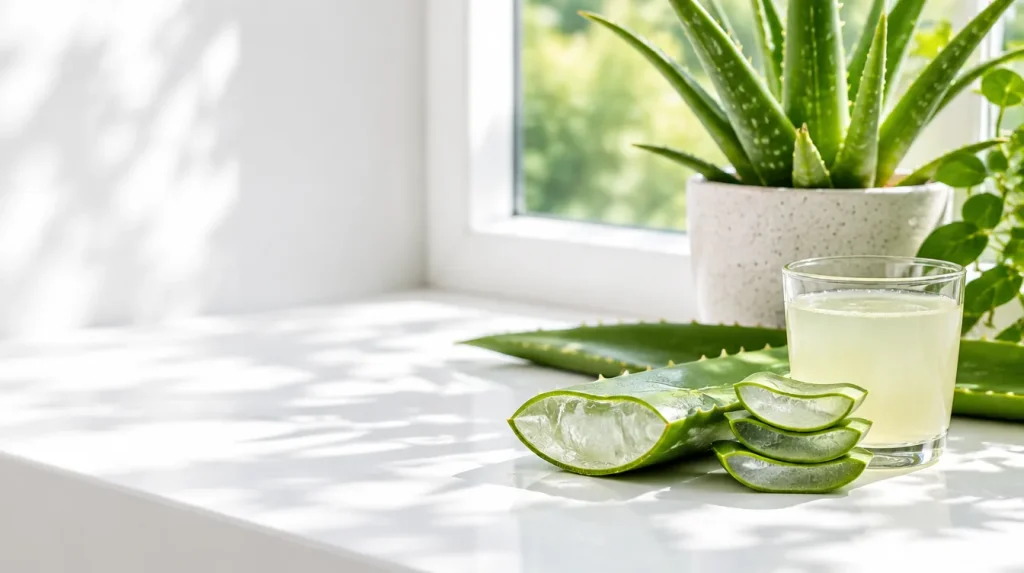
An aloe vera drink is made from the gel inside the aloe leaf — the clear inner fillet, blended with water and usually a sweetener and some flavouring. The two things that separate a good one from a poor one are simple: how much aloe gel it actually contains (a figure the best bottles declare outright, rather than just picturing a leaf on the label), and whether it is made from the inner gel alone or the whole leaf. That second point is more important than any health claim, and we will come back to it.
You will also see aloe sold as a concentrate to dilute. A ready-to-drink bottle is simply more convenient — you pour a measured amount and drink it, no mixing.
The honest part: what can and cannot be claimed
There are no authorised GB health claims for aloe vera. The botanical health claims that were submitted — like many for herbal ingredients — were never approved, so no one is permitted to make a health claim for an aloe vera drink. The same goes for the ginseng, camomile and tea that often flavour these drinks: none carries an authorised claim either.
So if a bottle or a website tells you aloe vera will do a particular thing for your health, that wording is going further than the evidence and the law allow. We would rather tell you plainly: people drink aloe vera because they like it and because it is a gentle, low-calorie way to vary what they drink — not because it has been shown to treat anything.
The one thing that genuinely matters: aloin
This is the part worth reading carefully. Just under an aloe leaf’s skin sits a bitter yellow latex containing aloin and related compounds (hydroxyanthracene derivatives). Aloin is a strong natural laxative, and these leaf compounds are banned in food in the EU and Northern Ireland after a genotoxicity assessment. A properly made drink avoids them.
That is why a well-made aloe drink uses only the inner-leaf gel and is processed to be aloin-free (sometimes called decolourised or purified). It is not a marketing flourish — it is the difference between a drink that is safe as a food and one made the wrong way. When you are choosing an aloe vera drink, “inner-leaf gel, aloin-free” is the single most important thing to check.
The sugar most labels hurry past
Aloe gel itself has very little flavour, so almost every aloe drink is sweetened. Check the sugar line on the nutrition panel, not the front of the bottle. Many are sweetened with fructose or fruit juice and carry a meaningful amount of sugar per serving — enough that, if you are watching your intake, it belongs in your daily total. A drink being “natural” or “plant-based” tells you nothing about its sugar; only the label does.
What to look for in an aloe vera juice
- A declared aloe percentage. The good bottles state it (e.g. “40% aloe vera gel”) rather than leaving it vague.
- Inner-leaf gel, aloin-free / decolourised. The safety point above — non-negotiable.
- The sugar figure per serving, read from the nutrition panel.
- Sweetener type — fructose and fruit sugars versus artificial sweeteners, whichever you prefer.
- Ready-to-drink vs concentrate, depending on whether you want convenience or to control the dilution yourself.
The four types of aloe vera drink sold in the UK
Walk down a supermarket aisle or search online and you will find aloe drinks in four broad styles. They are very different products, even though they are often sold under the same name.
| Type | What it usually is | Typical aloe content | Worth knowing |
|---|---|---|---|
| Aloe drink “with bits” | A sweet soft drink with small cubes of aloe gel floating in it, often fruit-flavoured | Often low or not declared | Closer to a soft drink than an aloe product. Check the sugar line, which can be high. |
| Pure aloe vera juice | Inner-leaf gel pressed and bottled with little or nothing added | Often 95–99%+ | Tastes noticeably bitter or vegetal. Usually unsweetened, so it is low in sugar. |
| Concentrate | Strong aloe liquid meant to be diluted at home | Varies, and depends on how much you dilute it | Looks cheaper per bottle. Compare the cost per glass you actually drink, not the bottle price. |
| Ready-to-drink gel drink | Inner-leaf gel diluted with water, lightly sweetened and flavoured | Typically 30–50%, ideally stated on the label | A middle ground: more aloe than a “bits” drink, easier to drink than pure juice. |
No type is automatically “best”. It depends on whether you put taste, sugar, aloe content or price first. What matters in every case is that the aloe percentage is stated, the gel is inner-leaf and aloin-free, and you have read the sugar per 100 ml.
What is the best aloe vera drink in the UK?
There is no official “best”. No aloe drink is allowed to claim a health benefit in Great Britain, so any ranking is about what is in the bottle, not what it does. A good one, whatever the brand, ticks these boxes:
- The aloe percentage is on the label. “Made with aloe vera” without a number tells you very little.
- It is made from inner-leaf gel and is aloin-free (sometimes labelled decolourised or purified). This is the safety point, not a marketing extra.
- You know how much sugar is in it. Sweetened drinks commonly carry 5–10 g of sugar per 100 ml; unsweetened pure juices carry far less.
- The serving size is clear, so you can work out the real cost per day.
- It is sold as a food drink, not as a skin gel or a laxative product.
If you would rather compare bottles side by side, our aloe label checker walks you through it in under a minute.
The NeoLife option
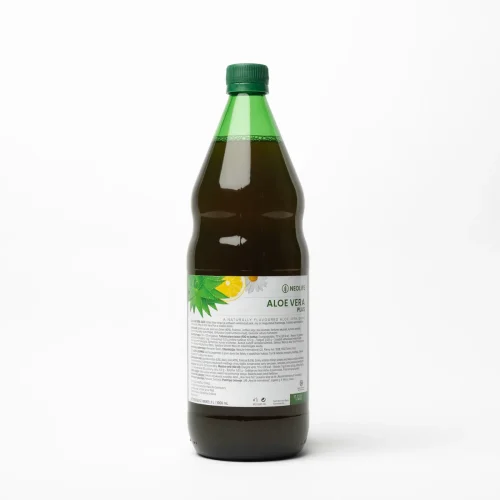
NeoLife Aloe Vera Plus is a one-litre, ready-to-drink bottle made with a declared 40% aloe vera gel, using inner-leaf gel that is aloin-free and made to International Aloe Science Council standards. It is flavoured with a herbal blend of tea, ginseng and camomile plus natural lemon — and, to be straight about it, NeoLife’s own product sheet says those herbs are there purely for taste, so we will not pretend otherwise. It is sweetened with fructose, which is where its 6.5 g of sugar and 28 kcal per 100 ml come from; the recommended 50–100 ml a day makes a bottle last ten to twenty days, which works out at roughly £1 to £2 a day. It is bottled in Switzerland. If it fits what you are looking for, you can buy the Aloe Vera Plus aloe vera drink with UK delivery.
Aloe vera juice, aloe vera drink or aloe water: what is the difference?
The names overlap and nobody regulates them, so use them as a rough guide only.
- Aloe vera juice usually means inner-leaf gel on its own or nearly so, sometimes sold as a concentrate. It is the strongest-tasting.
- Aloe vera drink usually means that gel diluted with water, sweetened and flavoured, ready to pour.
- Aloe vera water is the lightest style: a small amount of aloe in still or sparkling water, often sold in cans or small bottles as a soft drink. The aloe content is usually low and often not stated.
None is automatically better: compare the declared aloe percentage, whether it is aloin-free inner-leaf gel, and the sugar. If you like the idea of aloe water but want to know what you are drinking, one option is to top up a measured 50 ml of a declared-percentage aloe drink with chilled sparkling water. You get a long, light drink and you know exactly how much aloe is in the glass.
How often should you drink aloe vera?
Follow the amount on the label. Aloe drinks are sold as foods, and the manufacturer sets the recommended serving; for NeoLife Aloe Vera Plus it is 50 to 100 ml a day. Many people have it once a day, and some only a few times a week. There is no evidence that more is better, and drinking more than the label suggests adds sugar.
If you drink one daily, count the sugar on the label into your day, and stick to drinks made from aloin-free inner-leaf gel.
Should you drink aloe vera in the morning or at night?
Whenever suits you. There is no evidence that one time of day is better than another, and no authorised claim that links aloe to digestion, sleep or anything else at a particular hour. In practice:
- Morning: many people pour a small glass alongside breakfast so it becomes part of a routine.
- With a meal: some prefer it with food because the slightly tart, herbal flavour sits better that way.
- Evening: perfectly fine. Just remember that sweetened aloe drinks contain sugar, and some flavoured blends contain tea extract, so check the label if you avoid caffeine later in the day.
The most useful habit is sticking to the label amount, not the time on the clock.
How to drink aloe vera: serving ideas
- Neat and chilled. Shake the bottle first (the gel settles), pour 50–100 ml into a small glass and drink it cold.
- Long and sparkling. Top up 50 ml with sparkling water and a slice of lemon or cucumber.
- In a smoothie. Stir a measured serving into a fruit smoothie if you find the herbal note strong on its own.
- Over ice. Pour over ice with a few mint leaves.
Once opened, keep the bottle in the fridge and use it before the best-before date.
What about aloe vera for skin or weight loss?
You will see both claims online, and many people search for them. To be straightforward:
- Skin: there is no authorised health claim in Great Britain linking an aloe drink to your skin. Aloe gel applied to the skin is a separate cosmetic product; drinking aloe is not a substitute for it, and skin gels should not be drunk.
- Weight loss: there is no authorised claim for aloe and weight loss either. A sweetened aloe drink adds calories (about 28 kcal per 100 ml for Aloe Vera Plus), so if you are managing your weight, count it like any other drink.
Anyone selling an aloe drink “for” skin or weight loss is going further than the evidence and the law allow.
Who should not drink aloe vera?
Ask your GP, midwife or pharmacist first if you are pregnant or breastfeeding, have a bowel or digestive condition, or take prescribed medication. Most aloe drinks are sweetened, so anyone managing their sugar intake should read the label. Aloe drinks are not designed for young children.
Can you drink aloe vera gel straight from the plant?
No. Just under the skin of a raw leaf is a bitter yellow latex containing aloin, a strong laxative, which properly made drinks remove. And aloe gels sold for skin are not made to be eaten or drunk. If you want to drink aloe, choose a drink made for it.
What we do not claim
To be completely clear: there are no authorised GB health claims for aloe vera, and nothing here should be read as a promise of any health effect. It is a food, not a medicine, and it is not intended to diagnose, treat, cure or prevent any disease. Aloe latex and whole-leaf aloe preparations are a different matter from the inner gel and are not what is in a properly made food-grade drink; if you have a health condition or are pregnant, check with your GP before adding anything new.
Products in this guide
Sources
- Great Britain nutrition and health claims (NHC) register Department of Health and Social Care, GOV.UK
- Safety of hydroxyanthracene derivatives for use in food (2018) EFSA Journal
- Aloe vera: usefulness and safety National Center for Complementary and Integrative Health (US NIH)
Sources checked 16 October 2026. Health claims on this page use only wording authorised in Great Britain. How we write and check our guides.
Genuine NeoLife, delivered in the UK
Free UK delivery on orders over £150. Order online, no membership needed.
More guides
 Plant nutrientsLutein and Zeaxanthin: Food Sources, Supplements and What the Research ShowsLutein and zeaxanthin explained: the best food sources, why no UK health claims are authorised, what the AREDS2 eye research tested, and how to…
 Plant nutrientsPlant Sterols: Side Effects, How Much You Need and Who Should Avoid ThemPlant sterols explained: the authorised UK claims and the 0.8 to 3 g they need, the side effects and label warnings, who should avoid…
 Omega-3 & CoQ10EPA and DHA explained: how much omega-3 you actually needThe two omega-3s that matter, the 250mg figure that makes any label readable, and why '1000mg of fish oil' isn't what it sounds like.
