
Vitamins & minerals
Wheat germ oil and vitamin E: what they are and how to choose

Aug
Last reviewed Next review April 20273 sources
Quick answer
What are the benefits of wheat germ oil?
Wheat germ oil is one of the richest natural sources of vitamin E. The one authorised UK claim is that vitamin E contributes to the protection of cells from oxidative stress, which applies when a serving gives at least 15% of the 12 mg reference intake. The NHS says adults need 4 mg of vitamin E a day (men) or 3 mg (women), which most people get from food.
Key facts
- Vitamin E reference intake on labels: 12 mg a day.
- NHS requirement: 4 mg a day for men, 3 mg a day for women.
- Natural vitamin E is d-alpha-tocopherol; synthetic is dl-alpha-tocopherol.
- Wheat germ is the part of the grain milled out to make white flour.
Wheat germ oil is one of the richest natural sources of vitamin E there is, which is why it turns up as a supplement in its own right. This guide is the straight version: what wheat germ oil actually gives you, the one thing about vitamin E that can be claimed, the natural-versus-synthetic distinction that genuinely affects what you’re buying, and how to choose.
In this guide
What wheat germ oil is
Wheat germ is the nutrient-dense heart of the wheat grain — the part milled out to make white flour. The oil pressed from it is naturally high in vitamin E, carried as a spectrum of tocopherols. A wheat germ oil supplement is essentially a way to take that natural, food-derived vitamin E in a measured daily amount, usually as a softgel capsule. The figure that matters on the label is the quantified vitamin E content, because that is the part with a defined role.
What vitamin E does — the one authorised claim
Here is where a wheat germ oil / vitamin E product genuinely can make a claim, provided it contains enough. Vitamin E is a fat-soluble vitamin, and one authorised GB health claim applies:
“Vitamin E contributes to the protection of cells from oxidative stress.”
That claim may be used when a product is at least a source of vitamin E — 15% of the reference intake (which is 12 mg), i.e. 1.8 mg per serving. A meaningful wheat germ oil capsule clears that comfortably. That is the one thing that can be said; there is no authorised claim that wheat germ oil itself does anything beyond the vitamin E it carries, so treat any broader promises with scepticism.
Natural vs synthetic vitamin E — the distinction worth knowing
This is the buyer’s-eye difference between two products that both say “vitamin E”. Natural vitamin E is d-alpha-tocopherol (you may see it as RRR-alpha-tocopherol); synthetic is dl-alpha-tocopherol (all-rac). The natural form is better absorbed and retained by the body — roughly twice as bioavailable, which is why reference intakes treat them differently. Wheat germ oil supplies the natural form, and often a fuller spectrum of tocopherols rather than alpha alone. If you are choosing a vitamin E product, “natural d-alpha-tocopherol” on the label is worth more than the same milligrams of the synthetic dl– form.
How much vitamin E do you need?
The reference intake is 12 mg a day. Vitamin E deficiency is rare in people eating a normal diet, because the vitamin is widespread in everyday fats and oils. So a supplement here is less about fixing a shortfall and more for people who specifically want a natural, food-derived source of vitamin E as a daily antioxidant nutrient.
What to look for when buying
- The vitamin E amount and % reference intake, stated in mg (α-TE) — the quantified, claim-bearing figure.
- Natural (d-alpha-tocopherol) over synthetic (dl-), and ideally mixed tocopherols rather than alpha alone.
- Cold-pressed oil, which preserves more of the natural tocopherols.
- Allergens and suitability. Softgels are usually gelatine (not vegetarian), and wheat germ oil contains wheat — both essential to check.
- Value per day, not per bottle.
Food first
Vitamin E is easy to get from food: vegetable and seed oils, wheat germ itself, nuts (especially almonds and hazelnuts), seeds, and green leafy vegetables. Because it is fat-soluble, it comes naturally alongside dietary fats. A supplement is for people who want a concentrated, consistent natural source on top of a normal diet, not a replacement for it.
The NeoLife option
NeoLife Wheat Germ Oil with Vitamin E provides 10 mg of natural vitamin E (83% of the reference intake) per capsule, from 683 mg of cold-pressed wheat germ oil plus a mixed-tocopherols concentrate and natural d-alpha-tocopherol. At 83% of the reference intake it comfortably meets the threshold for the authorised claim that vitamin E contributes to the protection of cells from oxidative stress. It is 100 capsules, one a day — over three months’ supply. Two things to note: the capsule is a gelatine softgel (not suitable for vegetarians or vegans), and because it is made from wheat germ oil it contains wheat. £38.00.
What we do not claim
To be completely clear: the only authorised claim relevant to this product is the vitamin E oxidative-stress claim above — there are no authorised claims for wheat germ oil beyond the vitamin E it carries. It is a food supplement, not a medicine, and it is not intended to diagnose, treat, cure or prevent any disease. Because it contains wheat, it is not appropriate for anyone with coeliac disease or a wheat allergy — check with your GP if that applies to you.
Products in this guide
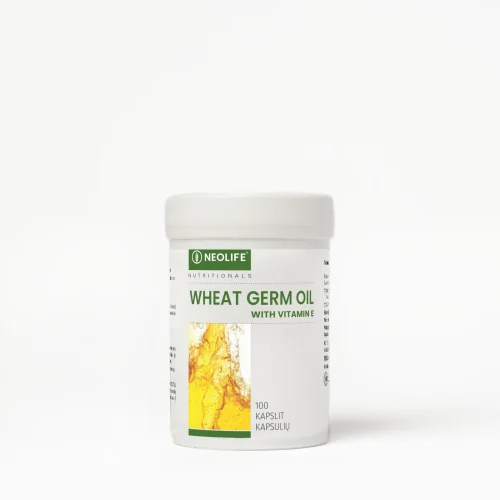
Sources
- Vitamin E NHS
- Great Britain nutrition and health claims (NHC) register Department of Health and Social Care, GOV.UK
- Regulation (EU) No 1169/2011, Annex XIII: reference intakes (NRVs) legislation.gov.uk
Sources checked 16 October 2026. Health claims on this page use only wording authorised in Great Britain. How we write and check our guides.
Genuine NeoLife, delivered in the UK
Free UK delivery on orders over £150. Order online, no membership needed.
More guides
 Vitamins & mineralsVitamin C benefits: what it does, and how to choose a supplementWhat vitamin C actually does — backed by authorised UK health claims — how much you really need, food sources, and how to choose…
 Vitamins & mineralsDo multivitamins actually work? An honest answer from a shop that sells themA multivitamin can't fix a poor diet — and we sell them. Who genuinely benefits, what the NHS says, and how to read a…
 Vitamins & mineralsTypes of magnesium: which is best, and when to take itGlycinate, citrate, oxide — what the types of magnesium actually mean, which is best for what, and the NHS daily figures in plain English.
