
Vitamins & minerals
Vitamin C benefits: what it does, and how to choose a supplement

Aug
Last reviewed Next review April 20274 sources
Quick answer
What does vitamin C do, and how much do you need?
Vitamin C contributes to the normal function of the immune system and to the reduction of tiredness and fatigue; both are authorised UK health claims. The NHS says adults need 40 mg a day, which most people get from food, while the label reference value is 80 mg. Taking more than 1,000 mg a day can cause stomach pain and diarrhoea.
Key facts
- NHS requirement: 40 mg a day for adults.
- Nutrient Reference Value on labels: 80 mg.
- Claims need at least 15% of the NRV (12 mg) per serving.
- Over 1,000 mg a day can upset the stomach (NHS).
Vitamin C is one of the most searched-for and most misunderstood nutrients in the shop. It has a long list of things it genuinely does — backed by claims that regulators have actually authorised — and a longer list of things it is popularly believed to do but does not. This guide sorts one from the other, tells you how much you really need, and, if you decide a supplement is worth it, helps you choose between a chewable dose and a sustained-release one.
In this guide
What vitamin C actually does
These are the effects of vitamin C that are supported by authorised health claims under the GB Nutrition and Health Claims Register (the retained EU Regulation 432/2012). They apply to any food or supplement that is at least a source of vitamin C — 15% of the Nutrient Reference Value (NRV), which is 12 mg per serving. Both NeoLife vitamin C products are well above that, so every claim below applies to them:
- Contributes to the normal function of the immune system.
- Contributes to the reduction of tiredness and fatigue.
- Contributes to normal energy-yielding metabolism.
- Contributes to normal collagen formation for the normal function of skin, bones, cartilage, gums, teeth and blood vessels.
- Contributes to the protection of cells from oxidative stress.
- Contributes to normal psychological function and the normal functioning of the nervous system.
- Increases iron absorption — useful alongside plant sources of iron.
- Helps regenerate the reduced form of vitamin E.
That collagen point is the reason vitamin C turns up in skin, joint and gum contexts: your body cannot build collagen properly without it. The immune point is why it spikes in search every winter — but read the limitations section below before you assume what that means.
How much vitamin C do you need?
For adults in the UK, the NHS sets the daily requirement at just 40 mg a day. The Nutrient Reference Value used on supplement labels is higher, at 80 mg, because it is a single figure meant to cover the whole population. Either way, these are modest amounts — a single orange or half a raw pepper gets you there.
Vitamin C is water-soluble, so your body does not store it: whatever you do not use is passed out. That is why very large single doses are mostly wasted, and why the NHS notes that taking more than 1,000 mg a day can cause stomach upset and diarrhoea. More is not better past a point.
Food first
Most people can get all the vitamin C they need from food, and that is the sensible starting point. Good sources include citrus fruit, peppers, strawberries, blackcurrants, broccoli, Brussels sprouts and potatoes. Vitamin C is fragile — it degrades with heat, light and long storage — so raw or lightly cooked produce keeps more of it.
Do you actually need a supplement?
Honestly, many people do not. If you eat fruit and vegetables most days, you are very likely already covered. A vitamin C supplement earns its place when diet is genuinely limited or demand is higher than usual — for example if you eat very few fresh fruit and vegetables, smoke (smokers need more), or simply want a dependable daily baseline on a whole-food base. It reads better to say that plainly than to pretend everyone needs one.
Chewable or sustained-release? The one decision that matters
If you do choose a supplement, the format is the choice that changes the experience. Because vitamin C is not stored, when it is delivered matters as much as the dose.
- Chewable, moderate dose — pleasant to take, closer to a food-level amount, and fine taken with a meal. Good if you want a gentle everyday top-up.
- Sustained-release, higher dose — designed to release its vitamin C gradually over 6 to 8 hours rather than all at once.
The two NeoLife options, side by side
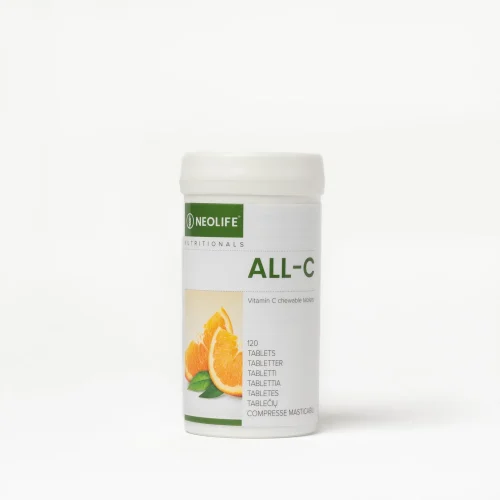
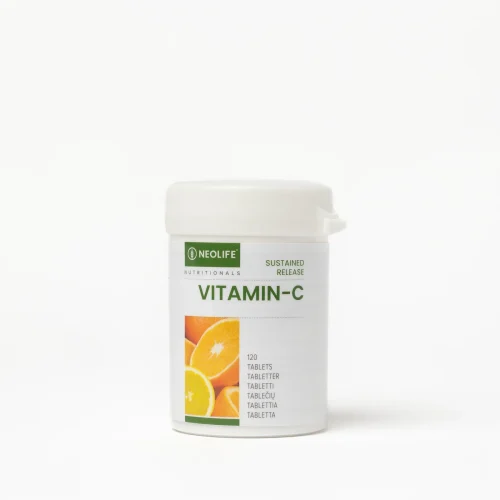
| All-C (chewable) | Sustained Release Vitamin C | |
|---|---|---|
| Vitamin C per tablet | 50 mg (62% NRV) | 200 mg (250% NRV) |
| Format | Chewable, orange-flavoured | Swallowed whole, released over 6–8 hours |
| With | Citrus bioflavonoids, whole-food orange base | Citrus bioflavonoids, acerola cherry, rosehip |
| Sugar | Sweetened (it is chewable) | Sugar-free |
| Pack | 120 tablets · ~4 months · about 21p/day | 120 tablets · ~4 months · about 27p/day |
| Best for | An easy, everyday, food-level dose | A higher intake that releases steadily |
In short: reach for All-C if you want a pleasant, moderate daily tablet, and Sustained Release Vitamin C if you want a higher dose that is designed to stay with you through the day rather than peak and pass.
What to look for when buying vitamin C
- The actual dose. Check the milligrams and the % NRV per tablet, not the marketing on the front.
- Release format. A sustained-release tablet is designed to release its vitamin C gradually rather than all at once.
- Bioflavonoids and whole-food companions such as acerola, rosehip or citrus bioflavonoids — traditionally paired with vitamin C.
- Sugar — chewable tablets are usually sweetened; sustained-release tablets you swallow are often sugar-free.
- Value per day, not per bottle — a four-month supply at ~21–27p a day is a fairer comparison than the shelf price.
What vitamin C will not do
This is where most of the myths live, so it is worth being direct. There is no authorised claim that vitamin C prevents, treats or shortens the common cold — the evidence did not support it, and no supplement here claims otherwise. What is authorised is that vitamin C contributes to the normal function of the immune system, which is a real but much more modest statement. A vitamin C supplement is a food supplement, not a medicine, and nothing here is intended to diagnose, treat, cure or prevent any disease.
Products in this guide
Sources
- Vitamin C NHS
- Great Britain nutrition and health claims (NHC) register Department of Health and Social Care, GOV.UK
- Regulation (EU) No 432/2012 on permitted health claims, as it applies in Great Britain legislation.gov.uk
- Regulation (EU) No 1169/2011, Annex XIII: reference intakes (NRVs) legislation.gov.uk
Sources checked 16 October 2026. Health claims on this page use only wording authorised in Great Britain. How we write and check our guides.
Genuine NeoLife, delivered in the UK
Free UK delivery on orders over £150. Order online, no membership needed.
More guides
 Vitamins & mineralsWheat germ oil and vitamin E: what they are and how to chooseAn honest guide to wheat germ oil and natural vitamin E: what it gives you, the one authorised claim, natural vs synthetic vitamin E,…
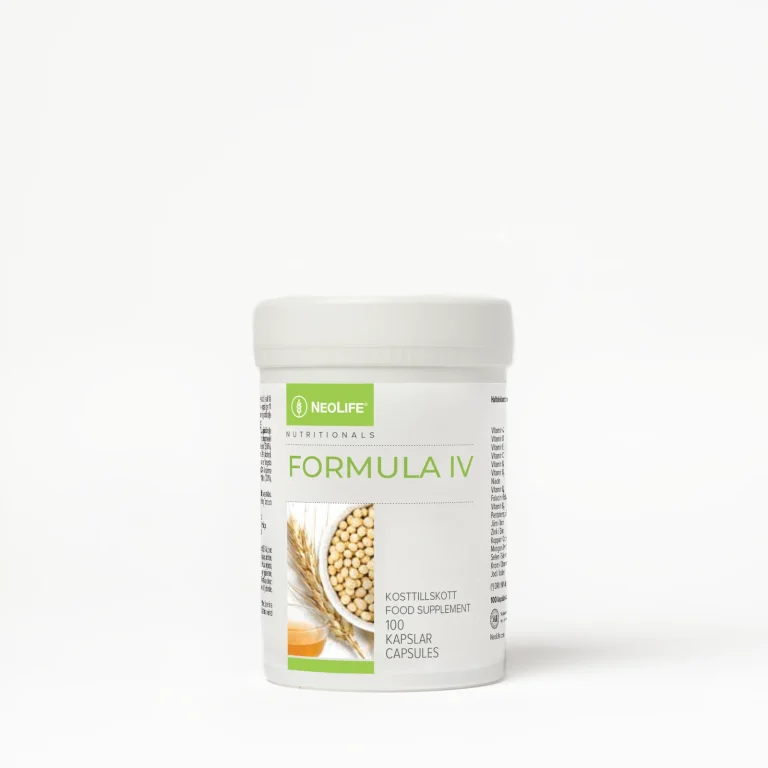 Vitamins & mineralsDo multivitamins actually work? An honest answer from a shop that sells themA multivitamin can't fix a poor diet — and we sell them. Who genuinely benefits, what the NHS says, and how to read a…
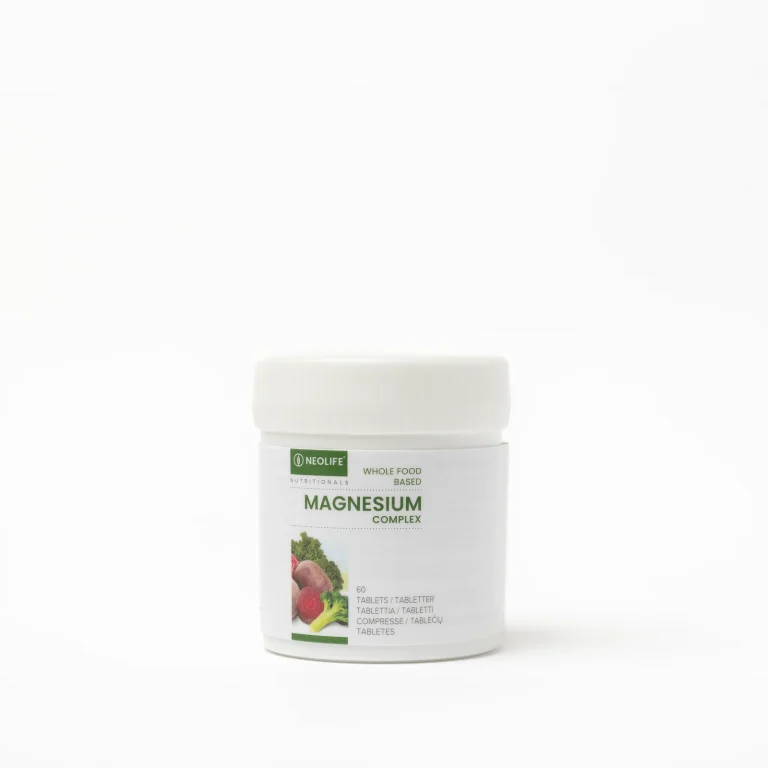 Vitamins & mineralsTypes of magnesium: which is best, and when to take itGlycinate, citrate, oxide — what the types of magnesium actually mean, which is best for what, and the NHS daily figures in plain English.
